by Kristi Jain | Dec 15, 2021 | Uncategorized
Thank you for joining me for this week’s blog. As it occasionally happens, today I sit at the keyboard with a touch of writer’s block. I expect that within a few minutes, ideas will start ruminating so that you might come away with a bit of motivation and inspiration. The mid December 2021 blog will be born shortly. Wait for it…
EXPECTATIONS
Years ago, I worked for an extraordinary doctor and friend. He was kind, peaceful and unassuming. I hear his words of wisdom in my head often. He was the complete antithesis to a typical type A personality (guilty as charged) who tend to be overly active, busy, with high expectations. His words impact me to this very day. See what they might do for you.
CHANGE IS CONSTANT
His gentle words of advice to me were often, “Change is constant, growth is optional.” I recall bolting into his office with a frenetic list of things that needed attention now or yesterday. He would sit back, listen and smile at my energetic delivery of the tasks at hand then calmly remind me to breathe, slow down, and “Let go of things I can’t control.”
HOLIDAYS
With the holidays in our face, the expectations amp up a bazillion times higher than other times of the year. The self-imposed expectation of a heavily decorated home that would make Clark Griswald proud, the lengthy list of Christmas cards to produce, the line at the post office, the Christmas cookies to bake, a plethora of wrapped gifts nestled under a Pinterest worthy Christmas tree and attending or hosting parties each week are just the tip of the holiday iceberg. I’m exhausted just typing this paragraph. This reminds me of the pressure of holiday expectations.
LET IT GO
Consider what might happen if you didn’t expect. Then perhaps you won’t be disappointed. This year, I’m attempting a slightly different approach. What is the worst thing that can happen if I didn’t accomplish all of the above? The answer is nothing. The holidays will come and go as they always do. This year, try granting yourself a little more peace with a lower expectation. No one needs a stroke or heart attack from the stress the holidays bring. There is certainly something to be said for “Letting it go.”
QUOTE DU JOUR
“You are your own worst enemy. If you can learn to stop expecting impossible perfection, in yourself and others, you may find the happiness that has always eluded you.”
-Lisa Kleypas
HDD
We expect to wake up with a healthy functioning brain and a body that moves effortlessly from point A to point B. Although most of this is automatic to many of us, some are not so lucky. Take good care of yourself especially during this busy holiday season. Your health is the greatest gift you will ever receive. Lower your expectation, let go of things you can’t control and take really good care of you. If we at HDD can help with any of your diagnostic ultrasound needs, call us at 505-350-3397.

by Kristi Jain | Dec 8, 2021 | Uncategorized
Today’s blog is one of those that has little to do with ultrasound or healthcare. Every now and again I allow myself to venture off track for the sake of a good old fashioned motivational inspirational blog that is good for the mind, spirit, soul and in turn the body. The following are bits taken from the great Denzel Washington.
FALL FORWARD
Denzel once gave a commencement speech that discussed a topic where he included the idea of falling forward not back. He says “Why would I want to go backward? Instead, I intend to move forward. If I fall, it’ll be in the right direction. Fall big. Fall hard. If you fail, at least you are going to see what you hit.”
WHAT’S YOUR GIFT?
Mr. Washington asks, “What is your gift and what are you going to do with what you have?” He said to look at some of the most famous faces from history and they’ll tell you the same thing. Talent without working hard is nothing.
- Michael Jordan said, “Talent wins games, but teamwork and intelligence wins championships.”
- Maya Angelou said “Talent is like electricity. We don’t understand electricity. We use it.”
- Wolfgang von Goethe said, “The person born with a talent they are meant to use will find their greatest happiness using it.”
- Nelson Mandela said, “There is no passion to be found playing small and in settling for a life that is less than the one you are capable of living.”
Falling back is settling. Falling forward is a risk. It takes a lot to dust yourself off and go again.
I’VE GOT NOTHING
I’ve chatted with many souls who don’t feel like they have a specific talent or much to contribute. Denzel’s speech included a few examples of some famous failures that turned out to be wins.
- Reggie Jackson struck out 2,600 times in his career, the most in the history of baseball, but you don’t hear about the strikeouts. People remember the home runs. Fall forward.
- Thomas Edison conducted one thousand failed experiments because the on thousand and first was the lightbulb. Fall forward.
Aspire to make a difference. The idea is that to succeed, you must first fail.
JUST DO IT
Mrs. Washington is quoted as saying, “To get something you never had, you have to do something you never did.” Afterall, we regret the things we don’t do, instead of the ones we do.”
HDD
You’ll agree, today’s blog has nothing to do with diagnostic ultrasound, however I hope you found some value in it. At HDD, we have a talented, hardworking, experienced staff who prides themselves on teamwork to bring you the very best in diagnostic ultrasound. We aspire to fall forward and make a difference for you and your healthcare provider. If you require ultrasound, call us at 505-350-3397.
by Kristi Jain | Nov 30, 2021 | Uncategorized
Thanks for taking a few minutes to read the words that became this week’s blog. Speaking of words, that is exactly what we will touch on today. I got my inspiration from a TED talk I heard recently. BTW, did you know that TED stands for technology, entertainment and design? Just a little trivia for those who might be interested.
CELEBRITY THERAPIST?
This particular TED talk was by world famous author, motivational speaker, hypnotherapist and celebrity therapist, Marisa Peer. I guess I never thought much about a celebrity therapist before. If regular people need a therapist, I guess it would stand to reason that celebrities might as well. That being said, Marissa had some interesting thoughts on words.
HERE COME THE WORDS
Marissa tells us that what is expected tends to be realized. Watch your words, for they shape your reality. If you pick better words, you will have a better reality. Every word you say is a blue print that your mind and body will work to make real. Watch your inner dialogue. If it isn’t positive, you may want to change how you talk to yourself. Your mind will believe what you tell it.
WOULDA COULDA SHOULDA
There are a few words that can block you and your progress. Marissa says that the word should is a load of sh#t! Stop saying you should do something and actually do it. Wish is the same thing. Stop wishing and start doing. Have you ever invited someone to join you for something and the response you get is, “I’ll try.” Argh! As our old friend Yoda says, “Do or do not. There is no try.” Practice not using the word “but.” It negates what you just said. Try substituting the word “and.”
DON’T FORGET TO REMEMBER
Don’t forget to remember that what is expected tends to be realized. Use your words to make a picture so you will believe what needs to be realized. Install empowering beliefs, habits and thought patterns into your existence. Expect great things.
THE BRAIN LIKES THINGS THAT ARE FAMILIAR
Familiar is safe. We have a mind that believes that familiar is safe and unfamiliar is scary. My hope in writing weekly blogs for High Desert Doppler is to familiarize you with what we do, why we do it and share messages of inspiration, motivation, health and wellness to make you familiar and comfortable with us.
ULTRASOUND
If you or your healthcare provider believe diagnostic ultrasound is indicated, we hope you think of us. Let’s face it. If you’ve never had an ultrasound done, it may be unfamiliar and can be scary. Rest assured it is an easy, painless, non-invasive, quick procedure that can be done in the comfort of you home, office or facility. Give us a call at 505-350-3397.
by Kristi Jain | Nov 23, 2021 | Uncategorized
Looks like we’ve almost made it. We have a few more weeks ahead of us until we can kiss the unprecedented year 2021 good riddance! For many it has been the most difficult year in memory. For others it has been challenging but not that bad. No matter how tough it has been, be thankful. Remember, someone somewhere is fighting to survive.
THANKSGIVING
A favorite holiday is just days away. Thanksgiving 2020 may take on a whole new look and feel. Some may choose to stick with tradition. Others may choose to treat it as just another calendar day due to lack of family, resources, or concern about spreading the Delta variant to our loved ones. Whatever your situation is, remember the day is less about the menu or the number of guests around the table and more about being grateful.
FOCUS
We tend to focus on gratitude especially on Thanksgiving Day. How about the other 364 days? A daily practice of gratitude can help you focus on the positive things occurring in your life instead of harping on the negative. If you are feeling bummed, a reminder to refocus can actually help you feel happier.
QUOTES TO GET THIS PARTY STARTED
“Acknowledging the good that you already have in your life is the foundation for all abundance.”
-Eckhart Tolle
“This is a wonderful day. I’ve never seen this one before.”
-Maya Angelou
“Reflect upon your present blessings, of which every man has many, not on your past misfortunes, of which all men have some.”
-Charles Dickens
“Gratitude can transform common days into thanksgivings, turn routine jobs into joy, and change ordinary opportunities into blessings.”
-William Arthur Ward
“He is a wise man who does not grieve for the things which he has not but rejoices for those which he has.”
-Epictetus
“Enjoy the little things, for one day you may look back and see that they were big things.”
-Robert Brault
“Appreciation is a wonderful thing. It makes what is excellent in others belong to us as well.”
-Voltaire
TAKE IT FOR GRANTED
The expression to take for granted means “to accept without question or objection,” and often implies a lack of appreciation or gratitude. We all do it at one point or another. Don’t ever assume you will always have it. Maybe it is time to re-examine your life and think about the things you take for granted.
YOUR HEALTH
We wake up each day assuming we will feel fine or at least better. A healthy mind and body bring freedom that we take for granted until we no longer have it. Take precautions, be aware, pay attention and don’t take your good health for granted. Be smart and wear your mask out of respect for others and be grateful they do the same for you.
HDD
Each of us at HDD extend a wish for a happy and healthy Thanksgiving to you and yours. We are available for all your diagnostic ultrasound needs. Call us at 505-350-3397.
by Kristi Jain | Nov 17, 2021 | Uncategorized
Go ahead, read this first paragraph and see if you want to continue with the rest of the blog. It is related to health. Have I lost you yet? Let’s take it a step further. If your idea of “Super food” is an extra grande burger, fries and soda, perhaps this write up isn’t for you. Then again, maybe it should be. For those of you who have even the slightest interest in health and wellness, see if today’s blog can offer you anything you were unaware of.
CHA CHA CHA CHIA
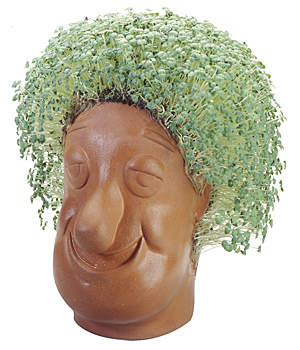
I realize this is random however, let me invite you to think back about 20 years ago around Christmas time. Do you recall TV commercials for Chia pets and Chia heads? Remember those grooved terra cotta figurines you smeared with moistened Chia seeds, waited and watched them grow? Today’s blog is to inform you or remind you that Chia seeds are not what they used to be. If you have an old Chia pet you got at a white elephant gift exchange, you might want to consider regifting it, unless you want to eat it!
EEEOOOWWW
For those who haven’t had the Chia experience, you might be grossed out at first. These innocuous little beauties are tiny black seeds that come from the mint family. When hydrated, they take on a gelatinous look and feel to them. Don’t let that stop you. Although they have an unusual texture, they don’t taste like much. Then why eat them you might ask? They are an excellent source of fiber, calcium, protein, omega-3, promotes healthy digestion and manages blood sugar levels. They are high in antioxidants, increase energy and can help with weight loss!
WEIGHT LOSS?
It has been reported that Chia seeds can actually aid in the battle of the bulge. Adding 2 tablespoons of Chia seeds to your diet provides your body with almost 10 grams of fiber. Diets high in fiber have been linked to weight loss. According to research, eating 30 grams of fiber daily may help you lose as much weight as if you followed a more complicated diet.
SUPER FOOD
Chia seeds are considered a super food. They are an excellent source of omega-3 fatty acid that help reduce plaque in your arteries and improve your brain and cognitive functions. They can help reduce inflammation and decrease the chance of developing deep vein and arterial thrombosis or arrhythmia (irregular heartbeat.) Choosing a heart-healthy diet can reduce the risk of developing heart disease and stroke. They can also lower the amount of LDL (bad cholesterol) and triglyceride levels in your bloodstream. So, are chia seeds all they are cracked up to be?
WORTH A TRY
Do your own research. Chia seeds may or may not be a game changer but they are certainly worth a try, aren’t they? If I can do anything to improve my health, I’m in! If we at HDD can do anything to help improve yours, give us a call at 505-350-3397.
by Kristi Jain | Nov 3, 2021 | Uncategorized
Folks, we are in the homestretch of 2021. Halloween is in the rear view mirror and the holidays are on the horizon. In a couple of months, we welcome 2022. We thought 2020 was rough. Not in our family. 2021 was excruciating yet we are alive, well and here to talk about it. I hope today’s blog inspires you to take some action.
COVID SHMOVID
Covid and the Delta variant have been the subject of discussion for the last year and a half. Enough already! Those of us who escaped relatively unscathed are grateful. Those who were not as fortunate, we honor and remember you. There have been other misfortunes that many of us have weathered that are not Covid related. I’d like to share as a reminder, we all need to take action.
TIME WAITS FOR NO ONE
Our family has endured the death of 2 precious family members in the last 8 weeks, which incidentally were not Covid related. The end of life can be excruciating and confusing for everyone involved. Please remember to take care of your business before your number is up! Time waits for no one. One of my departed loved ones left me “in charge” of her affairs upon her death. It is an honor to carry out her final wishes and it is an unimaginable responsibility even though she “had her ducks in a row.”
DECRAP
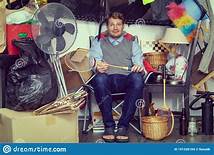
After going through countless files, documents, policies, worldly possession, furniture, clothing, and basic things we humans tend to hoard, let me give you a nickels worth of free advice. De-crap! Even if your will and trust are in order, there are myriad things that need meticulous attention that have nothing to do with legalities. Do your family a favor, if you don’t need it, don’t adore it or use it, get rid of it before someone else has to!
INSPIRED
The series of unfortunate events has gotten John and I into action. If you haven’t made an appt with your attorney to do a will and trust, I hope you are inspired to make the call. If your house looks like K-mart on a bad day, get rid of stuff! We think we have time. We don’t. A friend of a friend simply didn’t awake from her slumber at age 36. She thought she had time. She did not. In addition to unimaginable shock and grief, the inevitable task at hand is more than anyone deserves to deal with. Take care of your affairs…now!
HDD
Today’s blog has nothing to do with ultrasound, yet it does have to do with your health and your affairs. Please take care of both. When you don’t have your health, you have little. Get tested, screened and treated as indicated. Take care of yourself and make life a little easier on your loved ones as well. If we can help in the diagnosis with ultrasound, call us at 505-720-5623. Remember early detection can save lives.

Recent Comments