
by Kristi Jain | Jul 1, 2026 | Uncategorized
Most of us have been asked the question and often answer the same way. What do you do? We talk about our job, our title, our family or our origins. We define ourselves by what we do rather than who we are. What happens when the job ends, the kids grow up, the relationships shift, or the retirement arrives?
CHANGES
We tend to build identity around roles and responsibilities that feel stable and familiar. Life seldom stays unchanged for long. Seasons change, priorities shift, and circumstances force us to adjust. When that happens, it can leave us wondering what remains when roles the longer define us. Who are we?
IDENTITY
Titles and roles matter, but they’re not the whole story. Being a professional, parent, spouse, or caregiver says something about our daily life but it doesn’t fully capture our identity. When those labels change, it can feel uncomfortable especially when so much of identity has been attached to them. It’s a question most people don’t consider until it is.
SEASONS
At Vessel Health and High Desert Diagnostics, we believe health care is about more than treating illness. Perhaps life’s hardest seasons aren’t meant to erase our identity, but to reveal that healing involves caring for the whole person, body, mind, and spirit.
HEALTH PERSPECTIVE
Perhaps instead of asking “What’s wrong with me?” consider “How can I become healthier?” Health is about more than the absence of disease. It’s about enjoying life’s experiences and continuing to be the best version of yourself.
HEALTHCARE
What does identity have to do with health care? Actually, more than you think. In healthcare, often patients can become a diagnosis, a lab result or a condition. Testing and diagnostics are essential but they are only part of the bigger picture.
VH
At Vessel Health, the focus is on understanding the whole person and helping patients achieve long term wellness through prevention, lifestyle guidance, cardiovascular risk assessment, and personalized care plans. The goal is not simply to manage disease, but to help individuals live healthier, fuller lives.
HDD
At High Desert Diagnostics, advanced ultrasound and diagnostic imaging provide valuable information that helps physicians identify potential health concerns and make informed treatment decisions. Accurate diagnostics are often the first step in understanding what is happening inside the body. Together, these approaches remind us that health care is most effective when it combines knowledge with understanding. The images, reports, and test results matter, but so does the person behind them.
THE PERSON BEHIND THE NUMBERS
At the end of the day, you are more than a diagnosis or a medical chart. You are a life in progress. If you are ready to take a proactive approach to your health, Vessel Health and High Desert Diagnostics are committed to helping patients identify risks early and build a foundation for long term wellness. To schedule appointment, contact Vessel Health at 505-828-3000 or High Desert Diagnostics at 505-350-3397.
by Kristi Jain | Jun 10, 2026 | Uncategorized
You may have noticed that my blogs have been coming fewer and farther between lately. Over the last several months, life has required my attention elsewhere. I’m spending more time focused on family, work, health and trying to be more present in the moments that matter the most. Writing is something I enjoy, but even the things we love can benefit from an occasional pause.
PERSPECTIVE
That realization got me thinking about a simple truth. Too much of a good thing isn’t always a good thing. We live in a culture that constantly tells us that more is better. More success. More money. More productivity. More exercise. More information. More achievement. Life has a way of reminding us that balance often serves us better than excess.
EXAMPLES
Water is essential for life, yet too much can be harmful. Exercise strengthens our bodies, but overtraining can lead to injury. Ambition helps us achieve goals, but unchecked ambition can leave us exhausted, disconnected, and wondering why success doesn’t feel the way we expected.
EXTREMES
Many of us spend our lives caught in a cycle of extremes. We diet until we’re miserable, then overindulge. We work until we’re exhausted, then wonder why we’re burned out. We commit ourselves to helping others and neglect ourselves in the process. Most of us already know what is healthy. The challenge is finding moderation. It requires patience and self-awareness. More is not always better.
HEALTH
In healthcare, we see this often. Patients chase the newest fad, supplement, diet, or workout trend. They are looking for the magic answer when the greatest benefits often come from consistent habits practiced over time. Just because an influencer says it’s best doesn’t make it so. The goal is not perfection. The goal is sustainability.
SPACE
As I’ve gotten older, I’m learning that life isn’t usually improved by adding more. Often, it’s improved by creating space for rest, reflection, the people we love, and appreciation for what we already have. Sometimes the healthiest choice is not pushing harder. It’s stepping back and asking whether we’ve drifted too far from balance.
TAKEAWAY
Too much of a good thing can be too much. Health, happiness, and fulfillment are rarely found at the extremes. They are found in the quiet middle ground where discipline and flexibility coexist. Perhaps the question isn’t whether something is good or bad. Perhaps the question is, “Is this still serving me, or have I crossed the line from healthy to excessive?” The answer may tell us exactly where balance needs to be restored.
CALL TO ACTION
If you’re feeling overwhelmed, stretched too thin, or simply out of balance, take a moment to pause and evaluate where your time and energy are going. Small adjustments often create the greatest results. At Vessel Health and High Desert Diagnostics, we believe lasting wellness comes from sustainable habits, thoughtful choices, and a balanced approach to health. Sometimes less really is more. To learn about our preventive health and wellness services, contact Vessel Health at 505-828-3000 or High Desert Diagnostics at 505-350-3397.

by Kristi Jain | Apr 29, 2026 | Uncategorized
There’s always something new in health and wellness, something people are talking about, trying and wondering if it’s actually worth the hype. This week, that conversation centers around peptides. If you’re like most people, you might be curious but not entirely sure what it means. The word itself can sound technical or even a little intimidating at first. The truth is much simpler than it sounds. Let’s break it down in a way that actually makes sense.
THE BASICS
Everyone is talking about them. Here is what they actually do. Peptides are short chains of amino acids. These are the same building blocks that make up protein. Instead of building muscle or tissue, their main role is communication. They act like messengers, telling your body when to burn fat, when to feel full, when to reduce inflammation, and when to repair. In other words, they help regulate the systems that keep your body balanced. When they’re off, your body starts sending mixed messages.
WHAT TO WATCH FOR
Using peptides isn’t a “set it and forget it” type of approach. It’s a process of paying attention. The real value comes from noticing how your body responds over time period not dramatic overnight changes, but small meaningful shifts.
We’re watching for things like:
- Appetite changes
- Energy levels
- Sleep quality
- Cravings
- Mood patterns
Those subtle changes are the data. Over time, they tell a much bigger story about how your body is responding.
THE ADJUSTMENT
This is where a lot of people get it wrong. They rush the process. Early dosing isn’t about getting fast results, it’s about finding the right balance. A slight decrease in appetite? That’s useful. Mild nausea? That’s feedback. No change yet? That matters too. The goal is to work with your body, not override it. Small thoughtful adjustments lead to better outcomes and far fewer side effects. It’s the same philosophy we apply at High Desert Diagnostics, through ultrasound, we gather clear information first, then make thoughtful, informed decisions rather than guessing.
THE REALITY
Peptides are not magic. They’re tools. Like any other tool, they only work well when paired with the right habits.
They work best in conjunction with:
- Consistent protein intake
- Regular movement
- Quality sleep
Without those, even the best protocol has its limits.
THE OUTCOME
The real benefit isn’t just quick weight loss or quick results. Its regulation. When your body starts working with you instead of against you, everything shifts. You may notice less noise, fewer cravings and better decisions without constant effort. That’s where real sustainable progress begins.
CALL TO ACTION
If you’re curious about whether peptides could be a part of your health strategy or you want guidance on how to use them safely and effectively, we’re here to help. At Vessel Health, we focus on personalized, preventive care helping you to understand how your body is functioning and how to optimize it over time. At High Desert Diagnostics, we provide advanced imaging that supports early detection and a clear picture of your health from the inside out. Call High Desert Diagnostics at 505-350-3397 or Vessel Health at 505-828-3000.
by Kristi Jain | Mar 5, 2026 | Uncategorized
.
Thanks for taking a moment to read today’s blog. I’d like to take a few minutes to share more about Vessel Health and how it aligns with the mission we have long carried at High Desert Diagnostics. Our focus has always been on early detection through advanced vascular imaging. Over time, we recognize that patients wanted more than diagnostic answers. They wanted guidance, continuity, and ongoing prevention. That need led us to acquire Vessel Health as a strategic step offering comprehensive cardiovascular prevention alongside accessible primary care. Prevention is not an add-on. It is the central focus.
INTENTIONAL CAPACITY, PERSONALIZED CARE
Traditional primary care practices often manage 1,500-2,000 patients per provider, which can lead to shorter visits and reactive treatment models. At Vessel Health, we intentionally limit our membership capacity per provider so we can practice medicine differently. Our model includes advanced cardiovascular risk screening, 60 minute new patient visits, and 30 minute follow up appointments. Members benefit from direct provider access, minimal wait times, and relationship centered care. With a membership capacity of approximately 1000 individuals per provider, we deliver more attentive individualized care rather than volume based medicine. That allows us to focus on root- cause prevention instead of simply managing symptoms after disease has progressed.
TRANSPARENT MEMBERSHIP OPTIONS
Membership to our Lifestyle Program, provides members access to primary care services along with preventive cardiovascular care—the foundation of our model. We offer two membership tiers designed to ensure clarity and predictable pricing. The distinction between tiers is based primarily on product discount levels and is structured to provide greater savings for members who routinely purchase our products. Our Lifestyle Membership is $65 per month or $750 annually and includes access to preventive cardiovascular screening, monitoring, and prevention strategies, as well as primary care services. Our Enhanced Lifestyle Membership is $100 per month or $1,050 annually and includes the same access to primary care and cardiovascular prevention, along with expanded product discounts, lifestyle coaching consultations and classes, curated supplement guidance, and priority access to appointments when needed. By integrating prevention, primary care, and lifestyle support, our program delivers a comprehensive, proactive care experience with transparent monthly investment and no hidden fees.
A VISION FOR SUSTAINABLE PREVENTION
Our long term strategy is to build a sustainable, prevention focused healthcare model centered on cardiovascular risk reduction while maintaining strong primary care access. This structure allows us to detect disease earlier, reduce long term complications and improve outcomes for our members. It supports a high standard of personalized care but most importantly it allows us to practice medicine in a way that is thoughtful, intentional, and centered on long-term wellness.
MOVING FORWARD TOGETHER
If you are ready to move beyond reactive healthcare and take a proactive approach to your cardiovascular health, we invite you to learn more about our membership options. For all your diagnostic ultrasound needs please call High Desert Diagnostics at 505- 350-3357. Call Vessel Health at 505-828-3000 for your cardiovascular and primary care needs. We would love to help you take the next step toward lasting health.
by Kristi Jain | Jan 28, 2026 | Uncategorized
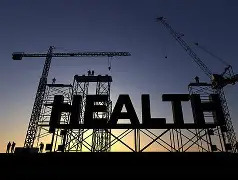
In medicine, we are trained to look for disease. A diagnosis. A lab result. A treatment plan. Health is often presented as something to be found, named or corrected. But real healing rarely arrives in a single moment of discovery. It is built quietly, over time, through repeated decisions that may feel small but matter deeply. The version of you that’s coming isn’t sudden or flashy. It’s under construction right now.
UNDER CONSTRUCTION
The version of you that’s coming is going to amaze you, not because it demands attention, but because it is steady. You are confident without being arrogant, kind without being a doormat. You hold boundaries without explanation and attract without chasing. You heal without broadcasting and win without boasting. This growth is intentional. It is layered, deliberate, and built not found.
CONFIDENCE
In health care, confidence is essential but true confidence is calm. It doesn’t need to announce itself or dominate a room. The most effective clinicians trust their training while remaining open, grounded, and collaborative. The same is true for patients. Confidence in your health journey doesn’t mean perfection. It means consistency, trust and the willingness to stay engaged even when the process may feel slow. Ordinary things, done consistently yield extraordinary results
CLARITY
Medicine is most effective when it provides understanding. Clear information about what is happening inside the body allows patients to move forward with confidence rather than uncertainty. When questions are answered and direction is established, decision making becomes easier and follow through improves. Clarity supports better choices, steadier progress, and stronger long term outcomes.
HEALING
Healing doesn’t need an audience. The body does its most important work quietly. Cells regenerate, inflammation resolves, systems recalibrate. Personal healing follows the same pattern. Healing often happens quietly. Progress shows up in improved function and small signs that the body is responding over time. Choosing rest, proper nutrition, movement and consistent follow through with health care plans helps support the body’s ability to heal.
PROCESS
The body changes through repeated input over time. Muscles strengthen through repetition. Bones adapt gradually. Nervous systems become more regulated with consistency. Growth is rarely linear but it is always responsive to consistent input. The best version of you is not something you chase. It is something you build one choice at a time. Trust the process.
KEEP GOING
You are under construction. This is not a weakness, it is proof of intention. The best version of you is awaiting somewhere ahead. It is being built right now. If you need support along the way, we are here to help. Call Vessel Health at 505-828-3000 to take your next step in your health care. Keep going. You’re worth it!

Recent Comments